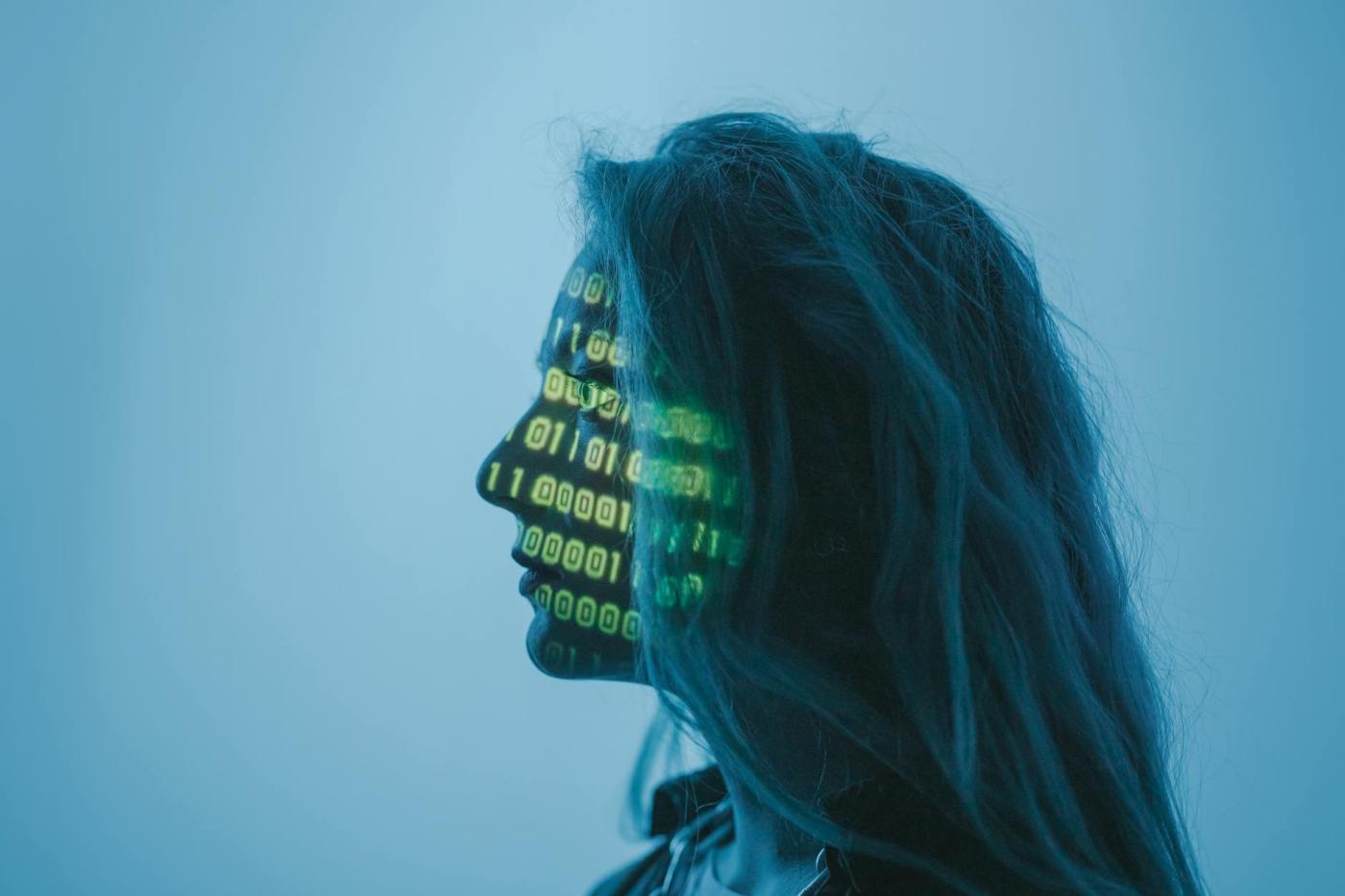
It’s one of the many big topics today, and there are a lot of big topics these days. If you’re not talking about it, you’ve heard about it. Some people have an existential fear of it, others hate it, and yet others, and I would argue a smaller group, are fully on board with it. The biggest debates are in the creative industries where the tech is being used to push aside the cost factor of professional talent.
Actors, writers, videographers, painters, graphic designers, and more. These industries are affected in a number of ways ranging from intellectual property (IP) theft to outright replacement. This is just my thoughts on the topic as an actor, photographer, and author.
First thing, defining AI.
For the purposes of this, I am defining AI as what is commonly referred to Generative AI (GAI), which are the large language models that currently have the western world’s focus. These are the reactive, algorithmic based imitations of thought and imagination. The older and more functional AI tools, such as spelling and grammar checkers, internet search engines, and profile algorithms for personal social media feeds I would refer to as Function AI (FAI). Chat bots and virtual companions, while utilising a form of GAI, do not directly impact on the purpose of my post here, so I will separate them with Companion AI (CAI).
The Main issue
To my mind, the main issue of GAI is the theft of creative property and identity, and the use of that same data to then replace said creators. This theft however is a generational issue that has been around for hundreds of years and, I would suggest, is a result of the capitalisation of personal effort and existing. If it wasn’t for the dependency people have on their ability to exist in a neo-capitalistic world, I wonder how important the acquisition of another’s talent would be? That’s a different discussion.
By theft, I mean the non-consensual acquisition of IP, and the non-consensual manipulation and deployment of said stolen material.
Yet theft of IP has been around long before GAI undertook the process of IP theft on mass. All GAI has done is industrialise and automate said theft. Fakes and mimicry are not a new phenomenon. Frauds in painting, impersonators, and identity theft have been a constant for the last few hundred years at least.
I contest that the main issue at play here is the theft of inspiration. Those without covet those with, and when profit, fame, acceptance are associated with inspiration, those without, fear being left behind.
And this is where Artificial Theft and Human Theft differ.
For the sake of simplicity, I will break down the acquisition of talent/inspiration into four easy to chew groups.
The Mentor
When someone trains under a master or mentor, acquiring their knowledge, learning their techniques, this is where inspiration is shared with consent. This includes modern day education and training, on the job experience, and even watching instructional YouTube, or online tutorials.
The Inspired
This is more akin to the gallery attendee, come to look at the art that adorns the walls. They see the results only of an artist’s work and attempt to discern the process in their own minds. They watch a play, TV show, film and try to appreciate the craft of acting, directing, and film making. They are inspired to find their own pathway to creativity, to find their own inspiration.
The Imitator
Mimicry is an artform of its own, used both for creative and fraudulent purposes. Comedians and impersonators would fall into the less offensive side of this group, as they often provide a commentary of events and personalities. It is done with the full awareness that it is mimicry, even if it may not be done with consent.
Yet there is a darker side to mimicry. When it is done with the intent to falsely promote personal ownership, or to personally profit at the expense of the artist, it has long been considered an unacceptable practice. In this I include the long history of fake painters, who attempt to impersonate the talents of established painters, and thus created an industry specifically for the verification of art authenticity.
The Thief
Finally, we have the simple act of unadulterated theft. Theft of a physical item, such as paintings, statues, and other physical creations, of the theft of personal attributes including look, voice, connections, etc.
The Line of Diminishing Consent
What we have across these four levels is a change in level of consent, going from full consensual agreement through to complete invasion of property, as it applies to humans. If we are to consider the current state of GAI and see how it fits into these groupings, the picture changes substantially.
There is, as yet, no evidence that GAI is capable of true creative reasoning. As an LLM, it can replicate patterns base on probabilities and programmed algorithms. The accuracy of these algorithms is impacted by the quality of the data it is fed. If the source is tailored to specific filters or focus, then the GAI is restricted to that scope. Essentially, if you feed the system bad data, you get bad results.
This reflects two of the four groups; The Mentor and The Thief. Data is either being fed with, or without the consent of the creator. Already, we have seen the much of what these current GAI’s have been fed has essentially been collected without consent, thus making a strong case for IP theft.
This leaves the other two.
Now the fundamental basis for how these GAI’s work is to mimic the patterns and structures it is programmed to scan through, based on algorithms written by humans. They have no innate intelligence in their own right. They impersonate intelligence using probabilities and modelling. So, by their very coding they are Imitators, and based on the method of acquiring the source for their mimicry, which is considered by most to be largely theft, it is not ideal. Then consider this mimicry is being used to harm the lifestyle and personal identity of creators and people in general, then it is a destructive practice resulting in the theft of personal attributes of other individuals.
Then there is inspiration. As stated before, there is no evidence that these GAI agents are capable of individual creative reasoning and thus are devoid of inspiration. In fact, one of the fastest growing complaints is the delusion factor most, if not all, GAIs have demonstrated regularly. They are incapable of evaluating their own delusional inventions, for want of a better term. Something human minds are extremely adept at.
GAI attempts to mimic inspiration, but it is fundamentally restricted by the scope of the data it has access to, which is possibly why these corporate entities are so very keen to get as much as they can. I suspect though that this is directly fuelling the delusional side-effects.
What It Means to Me
If GAI is used as a tool, with consent, consideration, and with the understanding of its limitations and risks, then it is a suitably useful tool to support mundane tasks and give more space for the very human trait of inspiration.
If GAI is seen as the ultimate replacement of human inspiration, then I have opposition to it. From both a personal position, and a view of the sustainability of society at large. Unfortunately, this feels like where the current push is. Cutting costs and increasing profit in a capitalistic world means subverting the most expensive part of progressive development; inspiration.


Leave a Reply